 PoreWise
Neutrogena · Cleansers
Hydro Boost Hydrating Gel Cleanser (Fragrance-Free)
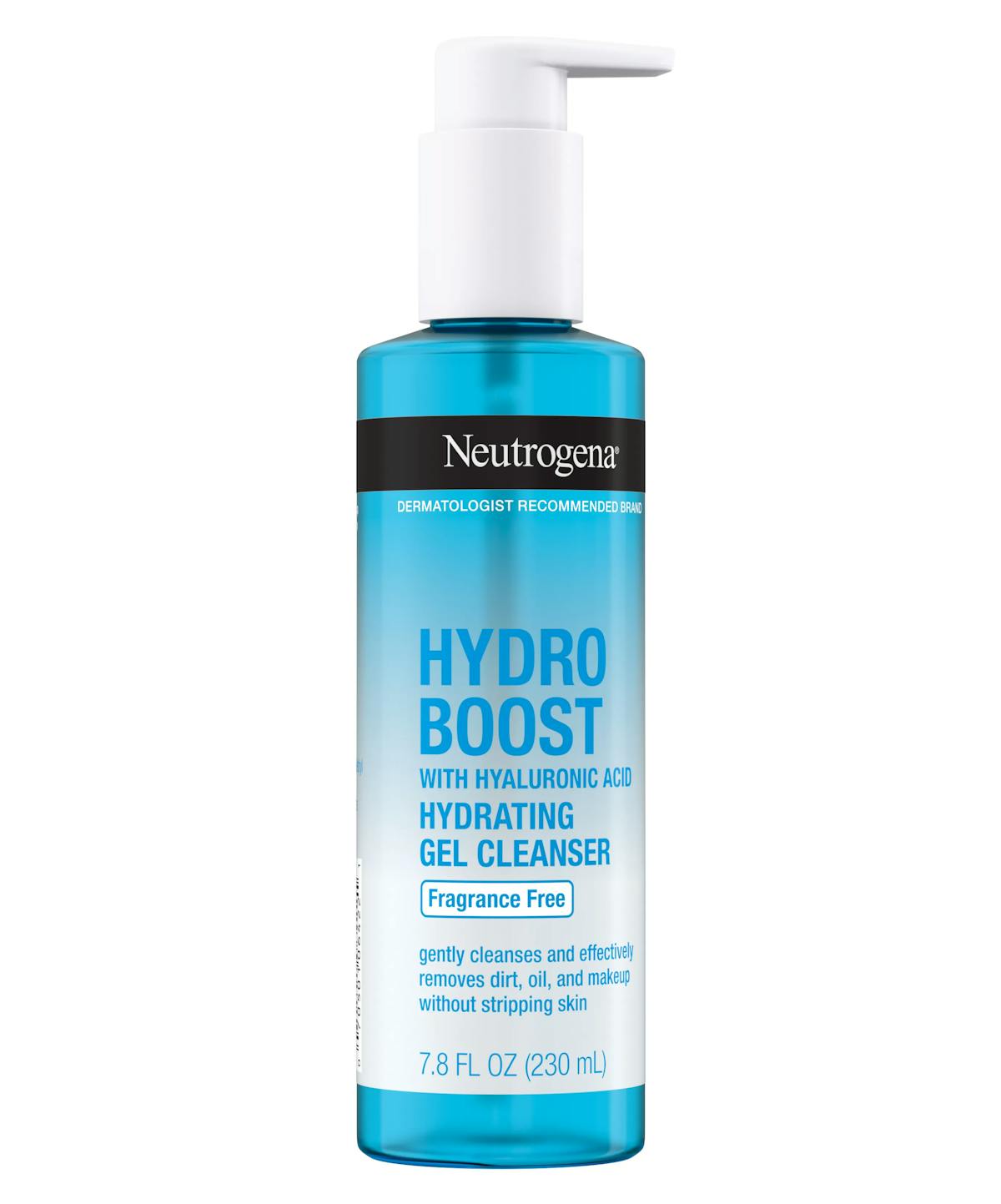
Product
- Brand:
- Neutrogena
- Product type:
- Cleansers
- Source page:
- https://www.neutrogena.com/products/skincare/neutrogena-hydro-boost-hydrating-gel-cleanser-fragrance-free/6806432
- Last checked:
- 2026-10-30
- Formula version:
- Pack label · 2026-10-30
- Fragrance & alcohol:
- Fragrance-free · Alcohol-free
17 ingredients on this list · WATER at number 1 · GLYCERIN at number 2 · COCAMIDOPROPYL HYDROXYSULTAINE at number 3
Product description
A fragrance-free gel cleanser built on four surfactants with glycerin and hydrolysed hyaluronic acid.
Full ingredient list
Kept exactly as the source printed it, including spelling in the original.
- 1 WATER
- 2 GLYCERIN
- 3 COCAMIDOPROPYL HYDROXYSULTAINE
- 4 SODIUM COCOYL ISETHIONATE
- 5 SODIUM METHYL COCOYL TAURATE
- 6 SODIUM CHLORIDE
- 7 SODIUM HYDROLYZED POTATO STARCH DODECENYLSUCCINATE
- 8 POTASSIUM ACRYLATES COPOLYMER
- 9 HYDROXYACETOPHENONE
- 10 PHENOXYETHANOL
- 11 LINOLEAMIDOPROPYL PG-DIMONIUM CHLORIDE PHOSPHATE
- 12 POLYQUATERNIUM-10
- 13 SODIUM HYDROXIDE
- 14 DISODIUM EDTA
- 15 CITRIC ACID
- 16 ETHYLHEXYLGLYCERIN
- 17 HYDROLYZED HYALURONIC ACID
Original label text
Water, Glycerin, Cocamidopropyl Hydroxysultaine, Sodium Cocoyl Isethionate, Sodium Methyl Cocoyl Taurate, Sodium Chloride, Sodium Hydrolyzed Potato Starch Dodecenylsuccinate, Potassium Acrylates Copolymer, Hydroxyacetophenone, Phenoxyethanol, Linoleamidopropyl Pg-Dimonium Chloride Phosphate, Polyquaternium-10, Sodium Hydroxide, Disodium Edta, Citric Acid, Ethylhexylglycerin, Hydrolyzed Hyaluronic Acid
Ingredient analysis
GLYCERIN · Humectants · COCAMIDOPROPYL HYDROXYSULTAINE · Cleansing agents · PHENOXYETHANOL · Preservatives
Humectants
3Bind water and draw it into the upper layers of the skin.
Cleansing agents
4Lift oil and dirt so they can be rinsed away with water.
Preservatives
2Inhibit microbial growth so the product stays safe to use.
Texture agents
2Set the viscosity and feel of a formula.
Emulsifiers
1Keep oil and water mixed in a stable formula.
Other
2Use on the ingredient list: see the product ingredient list.
Evidence
- Skin effect Human trial Certainty: Moderate Primary source
In a randomized, double-blind, four-arm crossover study of 51 healthy volunteers with dry skin, an emollient containing glycerol and petrolatum raised corneometry-measured skin moisture significantly above its vehicle (P < 0.0001) over 12 hours. The authors attributed the hydration gain to the glycerol component and the lower water loss to the petrolatum component.
Who it applies to: Corneometry (skin moisture) and transepidermal water loss over 12 hours after one application.
Study limits: Measured on the forearms. The significant hydration result comes from the full emollient containing both glycerol and petrolatum.
- Skin effect Review article Certainty: Moderate Primary source
Topical glycerol improves stratum corneum hydration, barrier function and skin mechanical properties. The review also reports reduced irritation response and faster wound healing, and traces the effect to aquaporin-3 transport and to glycerol's own presence in the skin.
Who it applies to: Leave-on products. The review discusses both healthy skin and skin with dry or barrier-impaired conditions such as atopic dermatitis.
Study limits: A narrative review. It compiles mechanisms and results from other studies.
- Skin effect Official ingredient listing Certainty: High Public database
Glycerin is classified as a humectant in cosmetic ingredient databases: its role in a formula is to hold water.
Who it applies to: Cosmetic formulas generally. · Ingredient database · GLYCERIN
Study limits: Skin effect of to the stratum corneum comes from a separate review of the literature. · Ingredient database · GLYCERIN
- Skin effect Human trial Certainty: Low Primary source
Eight weeks of a low-molecular-weight "nano" hyaluronic acid lotion, serum and cream reduced measured periorbital wrinkle depth by up to 40% and raised corneometer hydration by up to 96%.
Who it applies to: A three-step regimen (lotion, serum, cream) built on a low-molecular-weight hyaluronic acid, used for eight weeks on women with a mean age of 45.2.
Study limits: The percentages are within-group changes. 33 participants in one centre, and the material is described as "nano" hyaluronic acid.
- How deep it gets In vitro study Certainty: Moderate Primary source
Hyaluronic acid of 20-300 kDa crossed the stratum corneum in excised human skin, while hyaluronic acid of 1000-1400 kDa remained in the stratum corneum.
Who it applies to: Excised human skin with intact stratum corneum, measured by Raman micro-imaging after topical application.
Study limits: One laboratory's imaging study. Three molecular-weight grades were tested. "remains above" describes intact stratum corneum in this ex vivo setup.
- How deep it gets In vitro study Certainty: Low Primary source
In reconstituted human epidermis, hyaluronic acid of about 50 kDa penetrated better than the larger grades and increased expression of genes and proteins involved in tight-junction formation and keratinocyte cohesion; its TNF-α expression stayed close from the 20 kDa grade.
Who it applies to: Reconstituted human epidermis incubated with hyaluronic acid of 20, 50, 130, 300, 800 and 1500 kDa.
Study limits: The material tested is a defined ~50 kDa grade.
- Skin effect Brand claim Certainty: Moderate Public database
Hyaluronic acid and its salt bind water at the skin surface, giving a plumper look immediately after application.
Who it applies to: Leave-on hydrating products.
Study limits: The effect is largely surface and temporary. In dry air a humectant. · Finding · Sodium hyaluronate · Hydrolyzed hyaluronic acid
- Irritation Official ingredient listing Certainty: Moderate Public database
Cleansing surfactants remove surface oil along with dirt, which can leave skin feeling tight or dry.
Who it applies to: Rinse-off cleansers. Mildness depends on the whole surfactant system. · Ingredient database · SODIUM LAUROYL SARCOSINATE · COCAMIDOPROPYL HYDROXYSULTAINE · SODIUM METHYL COCOYL TAURATE
Study limits: Surfactant mildness is a property of the blend. · Ingredient database · SODIUM LAUROYL SARCOSINATE · COCAMIDOPROPYL HYDROXYSULTAINE · SODIUM METHYL COCOYL TAURATE
- Legal limits Official legal text Certainty: High Primary source
The EU Scientific Committee on Consumer Safety concluded in 2016 that 2-phenoxyethanol is safe as a preservative at a maximum of 1.0%, which is the limit already set in Annex V/29 of the EU Cosmetics Regulation. It estimated a margin of safety of about 50 for children.
Who it applies to: Phenoxyethanol used as a preservative in cosmetic products, at or below 1.0%.
Study limits: The dossier behind the conclusion was submitted by Cosmetics Europe, the industry association, and the committee lowered the default toxicokinetic factor from 4.0 to 1.0 on its way to the 1.0% conclusion. The final opinion kept 1.0%.
Related skin concerns
Skin concerns with evidence for ingredients on this list.
Formula history
1 version of this formula on record.